From Databases to AI: 25 Years of Smarter Business
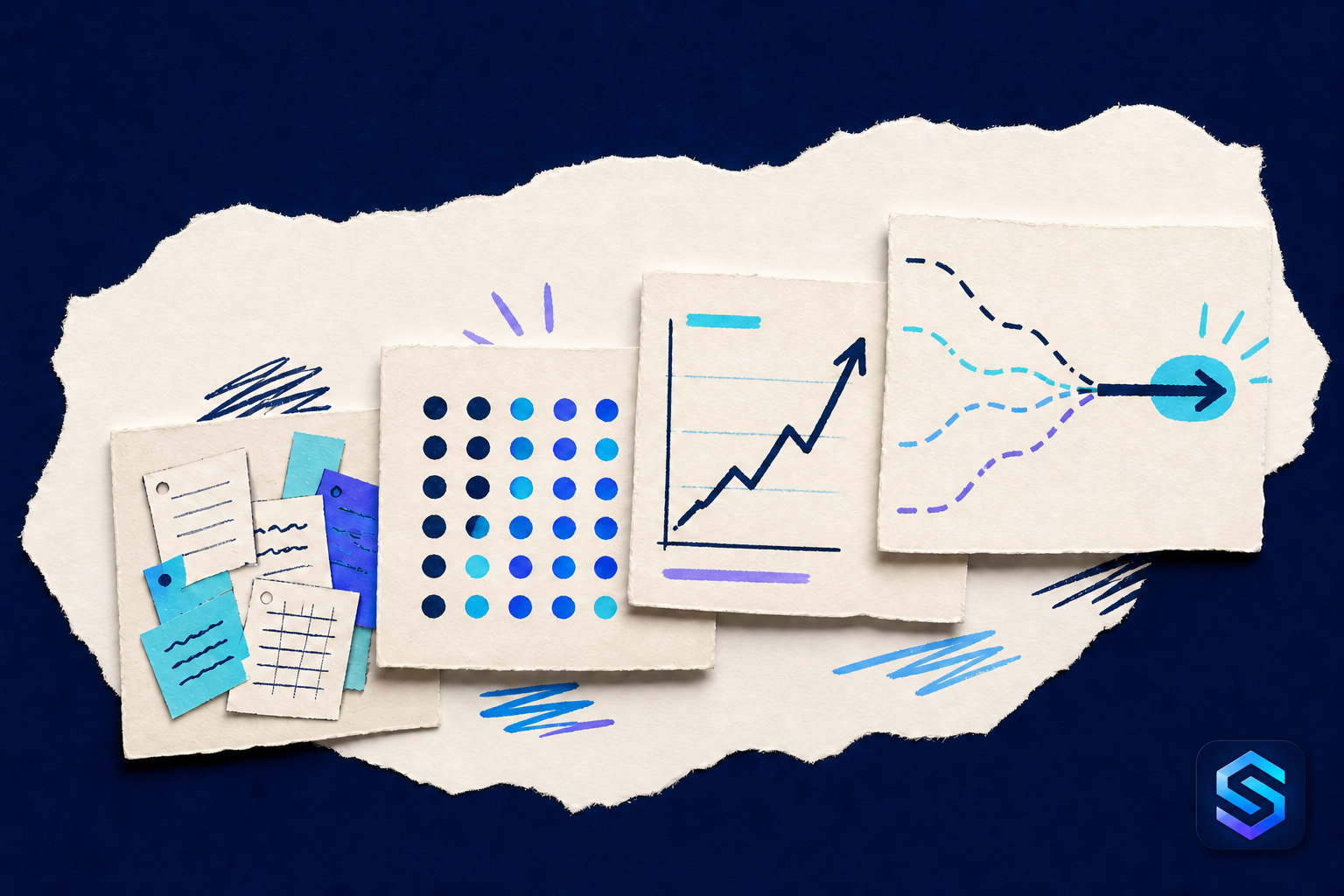
Over the past 25 years, technology has transformed how businesses collect information, understand their operations, and make decisions.
The change did not happen all at once. It came in stages. Each new era built upon the previous one—turning paper into data, data into reports, reports into insight, and insight into action.
The Age of the Database
Twenty-five years ago, many businesses were beginning to move away from paper files, filing cabinets, and information scattered across desks and offices.
Computers offered a more reliable and accessible way to store that information. Businesses began building databases, organizing their records, and creating structured systems for customers, sales, inventory, accounting, and daily operations.
For the first time, large amounts of business information could be stored in one place and retrieved without searching through piles of paper.
This was a major improvement, but collecting the data was only the beginning. Businesses still needed to search through it, combine it, and interpret what it meant.
The Age of Reports
After years of accumulating data, businesses faced a new challenge: they had plenty of information, but finding useful answers still required time and effort.
Reports became the solution.
There was a report for sales, another for inventory, another for expenses, and many more for specific questions. Instead of manually searching through databases and compiling the results, business owners and managers could receive the information they needed—sometimes directly in their inbox every morning.
Reports made data more accessible. They helped businesses monitor performance, compare results, and identify problems sooner.
However, reports mostly explained what had already happened. Someone still had to study the numbers, recognize patterns, and decide what to do next.
The Age of the Expert
As businesses generated more reports, interpreting them became increasingly important.
Analysts and specialists began using business data to identify trends, anticipate outcomes, and recommend actions. Dashboards appeared, bringing key information together in a visual format that was easier to understand.
Instead of reviewing dozens of separate reports, business leaders could see the health of their operations from a central hub. Systems could highlight unusual activity, track important indicators, and trigger actions when certain conditions were met.
Technology was no longer simply storing and presenting information. It was beginning to help people understand it.
Still, the quality of the result depended heavily on the time, experience, and availability of the experts reviewing the data.
The Age of AI
Today, we are entering another stage: the Age of Artificial Intelligence.
AI can work with information from databases, reports, dashboards, and other business systems to provide a broader understanding of what is happening. It can help review results, challenge assumptions, recognize patterns, and suggest possible courses of action.
This does not mean that AI replaces the judgment of a business owner or an experienced professional. It provides another perspective—one that can examine large amounts of information quickly and help people ask better questions before making important decisions.
AI is still in its early stages, but its capabilities are improving rapidly. As the technology develops, it will become an increasingly valuable partner in day-to-day business management.
The Responsibility Has Not Disappeared
Running a business has always required overseeing many moving parts. If anything, today’s business owner must understand more than ever: customers, employees, finances, operations, regulations, technology, and changing market conditions.
What has changed is the support available to them.
Databases made information easier to store. Reports made it easier to retrieve. Dashboards made it easier to understand. AI is now making it easier to explore possibilities and evaluate the next decision.
The responsibility still belongs to the person making that decision—but that person no longer has to work alone.
Moving Forward with Technology
Businesses have thrived by adopting the right technology at the right time. Others have struggled because they waited too long, selected tools that did not fit their needs, or allowed their systems to fall behind.
Today, there are more business tools and solutions available than ever before. The challenge is no longer simply gaining access to technology. It is choosing technology that supports the way your business actually works.
The next era will not belong only to the businesses with the most data or the most advanced software. It will belong to those that can bring their information together, understand it, and use it to make better decisions.
The journey began with replacing paper. It has now reached a point where technology can actively participate in the conversation.
And this is only the beginning.