When the Spreadsheet Becomes the Business
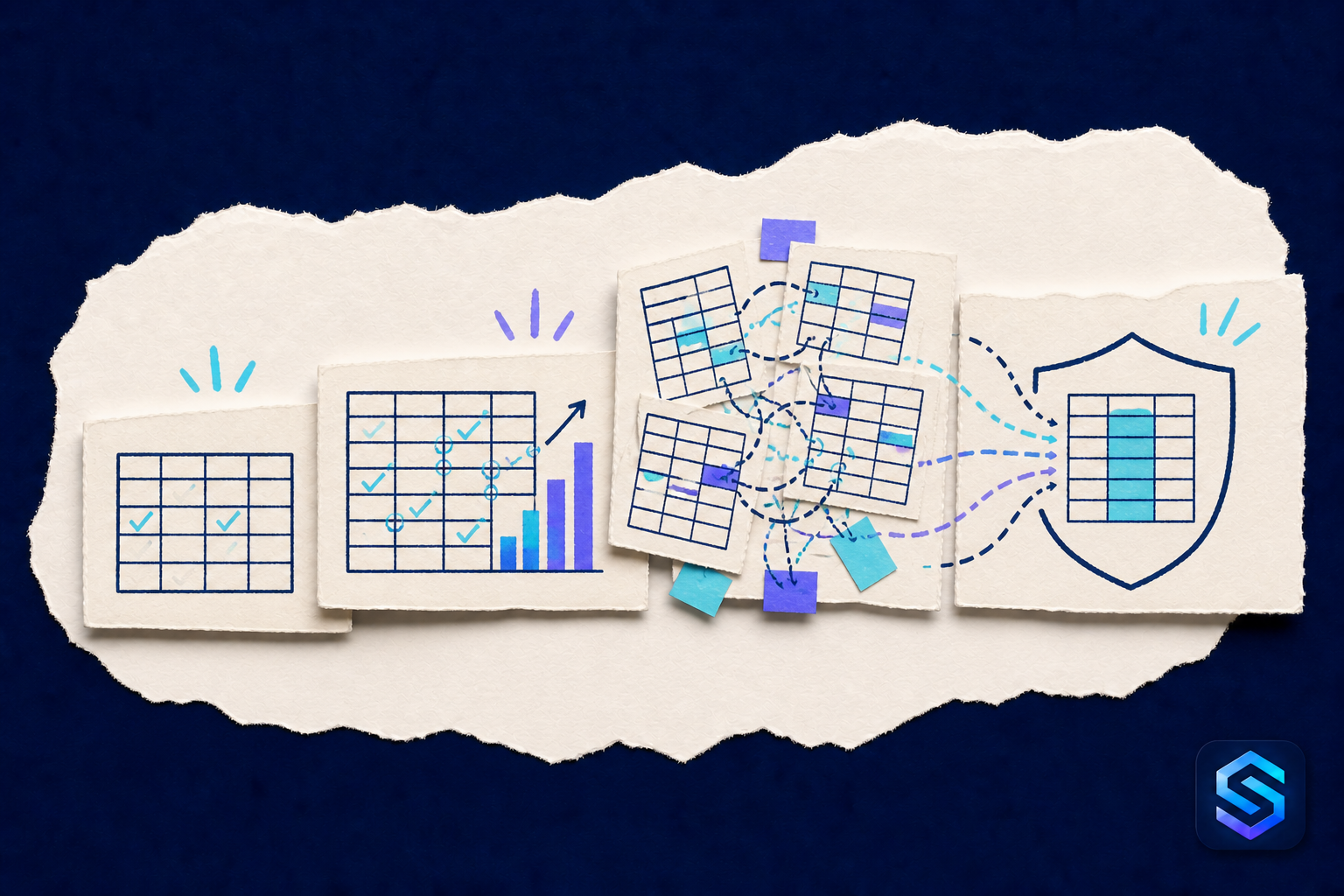
Spreadsheets are among the most useful tools ever placed in the hands of a business owner.
They can turn scattered ideas and information into something organized, practical, and easy to understand. Within a single file, you can track activity, perform calculations, prepare charts, create printable documents, and even bring in data from other systems.
A spreadsheet is also wonderfully flexible. You can change it whenever your needs evolve, refer to it at any time, or send a copy to a colleague. Tools such as Microsoft Excel make it possible to build a useful solution quickly, without developing an entire business system.
That combination of simplicity, flexibility, and power has helped countless businesses save time and bring order to their operations.
And when a tool works this well, we naturally begin trusting it with more.
A simple list becomes a customer database. A small calculation becomes a pricing system. A personal file becomes the document an entire team depends upon.
Little by little, the spreadsheet begins carrying responsibilities that no one originally intended it to carry.
That is when a remarkably useful tool can quietly become a source of concern.
A Tool That Solves Problems Quickly
A spreadsheet often starts with a simple need.
Perhaps you want to track customers, prepare quotations, manage inventory, schedule employees, or follow the progress of a project. Creating a spreadsheet can provide an immediate solution without requiring a new system or a lengthy implementation.
At first, everything is easy to understand. You know where the file is stored, what every column means, and how each formula works.
When something changes, you update the file. When someone needs the information, you send them a copy.
The spreadsheet saves time, brings order to the business, and helps everyone move forward.
When Success Changes the Situation
The problem does not appear because the spreadsheet failed.
It often appears because the spreadsheet succeeded.
The file becomes so useful that more people begin relying on it. More information is added, more formulas are created, and more copies begin circulating. What started as a convenient tool gradually becomes essential to the business.
At that point, the qualities that made it so accessible—being easy to copy, modify, and share—can begin creating risks that were not present when the file was first created.
Someone changes a formula without realizing how many calculations depend on it. A row is deleted accidentally. A typing mistake goes unnoticed. An older copy is updated while another employee works from a newer version.
Soon, one copy is stored on a shared drive, another is attached to an email, and another is saved on someone’s computer or USB drive.
Everyone has the information, but no one is completely certain which version is correct.
When the Puppy Becomes a Beast
The friendly little spreadsheet that once saved hours of work can eventually become a complicated system that no one fully controls.
It may now contain thousands of rows, interconnected formulas, hidden columns, imported data, and years of business history. Several employees depend on it, but perhaps only one person truly understands how it works.
If that person is unavailable, correcting a problem or producing an important report may suddenly become difficult.
Access can also become a concern. Anyone who receives the file may be able to read everything inside it, even when some of that information should be limited to specific employees. They may also be able to modify or delete important data without leaving a clear history of what changed.
What began as a small and helpful puppy has grown into a powerful beast.
The spreadsheet is no longer simply supporting the business. It has quietly become part of the business’s infrastructure—without necessarily having the security, controls, and accountability that important infrastructure requires.
Growth Changes the Rules
It is easy to build processes for the business you have today.
With five employees, everyone may know where information is stored, who is responsible for updating it, and what each column means. Questions can be answered through a quick conversation, and mistakes are often noticed immediately.
But businesses do not always grow gradually.
A new customer, contract, or opportunity can suddenly require 25 employees or more. More people need access to information. Responsibilities must be divided. Changes need to be tracked. Sensitive information must be protected. Managers need a reliable view of what is happening.
The informal processes that worked perfectly for a small team can become confusing almost overnight.
A spreadsheet that served five people very well may not be ready to carry the needs of 25.
Regaining Control
This is why many growing businesses eventually move critical operations into ERP and CRM systems.
These systems provide a central and controlled source of information. Instead of sending copies between employees, everyone works from the same current data.
Access can be based on each person’s responsibilities. Important changes can be recorded. Required information can be validated before it is saved. Processes can remain consistent even as more people become involved.
Taking control of the beast requires time. Existing files must be understood, information may need to be cleaned, and the new system must reflect how the business actually operates.
That work can feel demanding, but it is an investment. The time spent regaining control today can prevent countless errors, delays, and frustrations as the business grows.
Spreadsheets Still Have an Important Place
Moving critical operations into a controlled system does not mean that spreadsheets must disappear.
They remain excellent tools for organizing ideas, performing temporary analysis, exploring possibilities, and answering individual questions. Their flexibility continues to make them valuable.
The goal is not to stop using spreadsheets.
The goal is to recognize when a spreadsheet has moved beyond being a helpful tool and has become a system upon which the entire business depends.
Different responsibilities require different levels of control.
Prepare While Everything Is Still Clear
The best time to prepare for growth is while the business still feels manageable.
Today, you understand the files, the formulas, and the processes because you helped create them. Everything may still be clear in your mind.
That clarity is an opportunity.
It gives you time to document what matters, organize your information, and build a stronger foundation before growth introduces greater complexity.
Never assume that your business will always remain the size it is today. Growth can arrive suddenly, and it rarely waits for your systems to catch up.
If everything is clear in your mind right now, this is the right time to prepare for the future.
Let the spreadsheet remain the amazing tool it was meant to be—and take control before the tool begins controlling the business.