Cash Flow vs Profit: Why a Busy Small Business Can Be Short of Cash
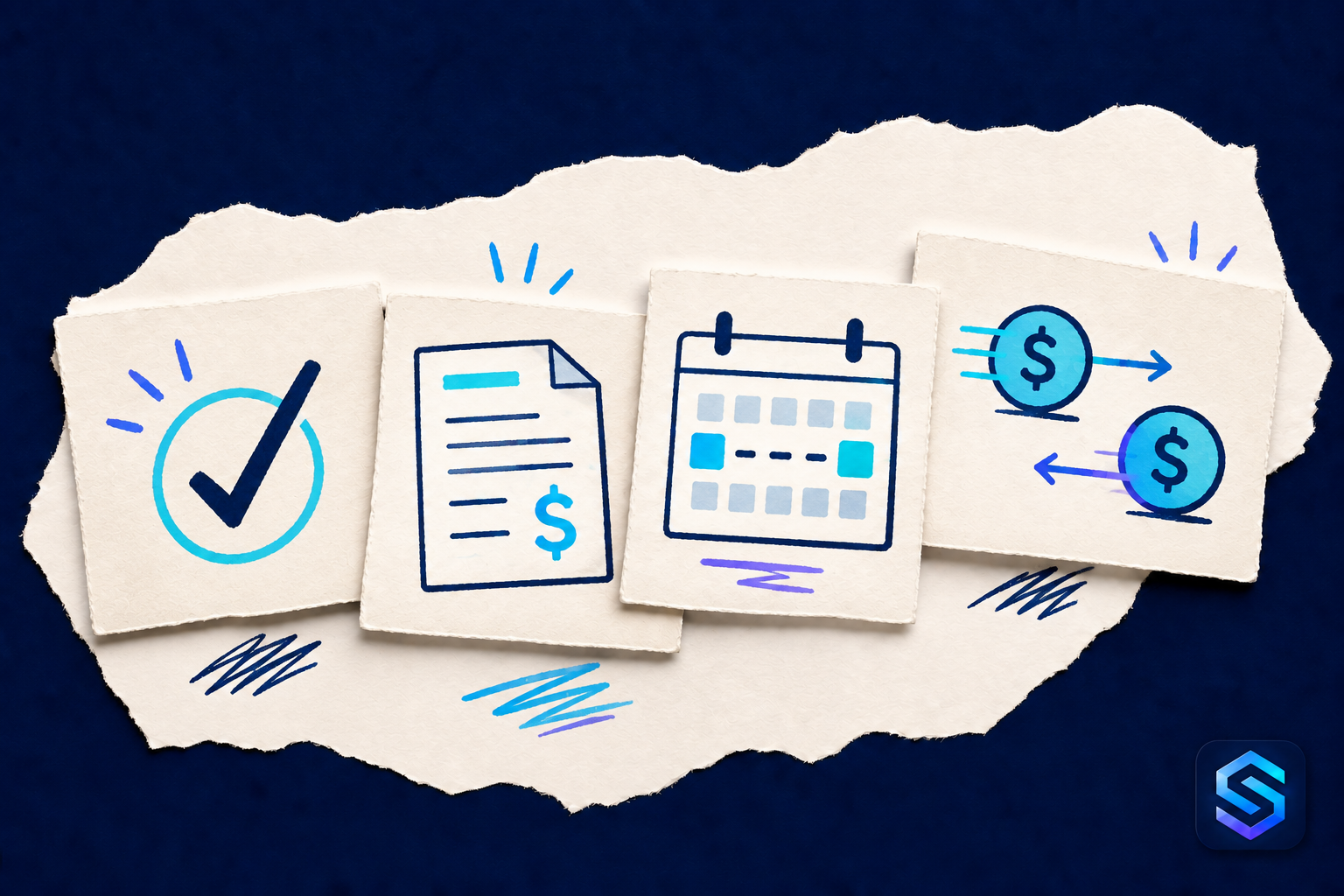
A full order book is encouraging. Yet a business can finish profitable work and still have a tight bank balance when wages, rent or supplier payments come due. The missing piece is often timing.
Profit and cash flow answer different questions. Profit compares recognized revenue with the expenses associated with a period. Cash flow tracks money actually entering and leaving the business. Under accrual accounting, a sale can contribute to profit before the customer pays. BDC explains this distinction in its guide to managing cash flow.
Follow one job through the calendar
Imagine a fictional service business that completes and invoices a $6,000 job on October 5. Assume all expenses associated with that job total $4,000 and are recognized in the same period. To keep the example simple, ignore taxes, financing and all other activity.
The job contributes $2,000 in profit in this simplified example. But suppose the business pays the $4,000 of expenses on October 10 and receives the customer's $6,000 payment on November 4.
- On October 5, the invoice records money owed by the customer; it is not a bank deposit.
- On October 10, the job has produced a $4,000 cash outflow and no customer cash receipt yet.
- On November 4, the receipt brings the job's cumulative net cash movement to positive $2,000.
The work can be profitable while requiring cash to cover the interval before payment. Several jobs following the same pattern can make that interval more noticeable.
Give expected receipts realistic dates
For each open customer invoice, distinguish the invoice date, contractual due date and expected receipt date. If the customer confirms a different payment date, record the update without losing the original due date.
Keep uncertain receipts visible as uncertain. A sales opportunity, a quote awaiting acceptance and an invoice already issued are different stages. Counting all three as assured cash would make the outlook difficult to trust.
Clear follow-up also helps identify practical obstacles: an invoice sent to the wrong contact, a missing order reference or a question about completed work.
Build a short view of upcoming cash movements
For a simple weekly forecast, start with the opening cash balance, add expected receipts and subtract expected payments. Carry the closing balance forward to the next week. Keep assumptions alongside the figures so they can be reviewed.
Compare the forecast with actual movements as the weeks pass. A receipt that arrives later than expected belongs in the revised forecast, not in a forgotten note.
A weekly review checklist
- Confirm the opening cash balance against current records.
- Review expected customer receipts and identify uncertain dates.
- Check scheduled supplier payments and other known outflows.
- Compare the previous forecast with actual receipts and payments.
- Assign follow-ups for missing information or changed dates.
Accounting software and business management records can provide useful inputs, but a forecast still depends on realistic assumptions. Your accountant can help connect this operational view with the company's full financial statements.
For the related question of whether individual jobs are earning enough, read about following project profitability while work is underway.