From Paper and Spreadsheets to Connected Workplace Safety Management
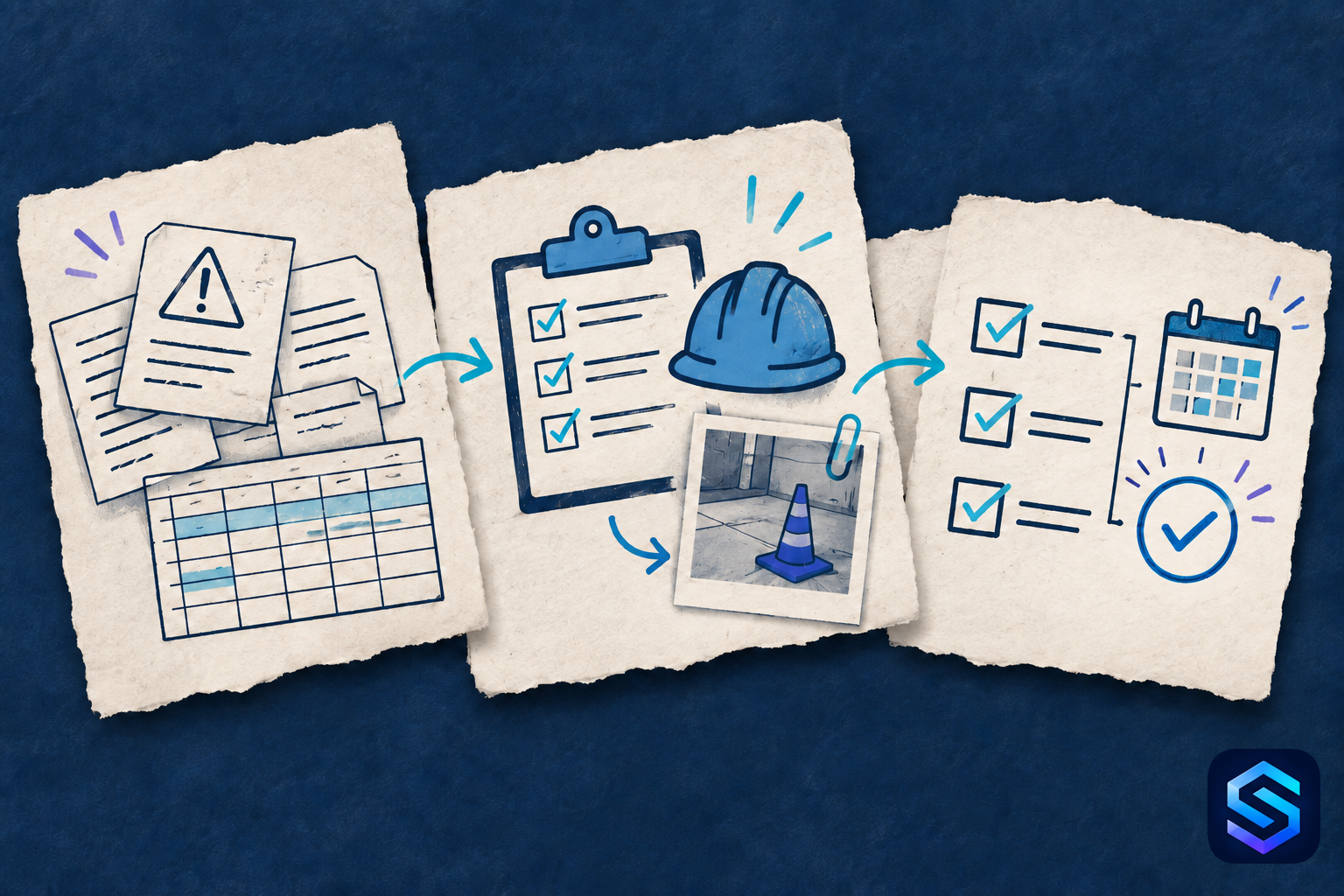
A workplace inspection identifies a hazard. Someone writes it on a form, takes a photo, and emails the supervisor. A corrective action is added to a spreadsheet.
A week later, a few questions remain: Who owns the action? Was the work completed? Where is the photo? Has anyone verified the result?
The information exists—but it is scattered.
Health and safety management is not only about recording what happened. It is also about keeping observations, responsibilities, evidence, and follow-up connected.
Where paper and spreadsheets become difficult
Paper forms are familiar and easy to carry. Excel offers flexibility for lists, dates, and tracking tables. For a small team with a straightforward process, both can be useful.
The difficulty grows when several people need to update the same information or connect different types of records.
An incident report may sit in a binder, inspection findings in a spreadsheet, training certificates in a folder, and follow-up conversations in someone’s inbox. Understanding the full situation means finding and comparing each piece.
Even a carefully maintained spreadsheet requires someone to keep those connections clear.
Follow the action, not just the report
Consider an inspection that identifies a damaged guard on a piece of equipment.
Recording the finding is the beginning. The team also needs to identify the location, attach supporting evidence, assign responsibility, set a target date, document the work, and record verification.
With connected software records, the corrective action can refer directly to the inspection finding. The person reviewing the action can see its context without searching through separate files.
Software does not perform the repair or decide whether the result is acceptable. It gives the people responsible a shared place to document their work and decisions.
Bring the main safety records together
A practical workplace safety workspace can connect five areas:
- Incidents and accidents: what happened, who was involved, immediate measures, investigation notes, and follow-up.
- Hazards and near misses: observations, locations, reported risks, and preventive actions.
- Inspections: inspection details, individual findings, photos, and follow-up notes.
- Training and certifications: employee records, providers, completion and expiry dates, and supporting information.
- Corrective actions: the source issue, responsible person, target date, completion notes, and verification.
These records serve different purposes, but their value increases when the relationships between them remain visible.
Fit the software to your process
Moving away from paper should not mean accepting forms that do not fit your organization.
When evaluating software, consider whether your team can adapt fields, organize records, connect related information, and prepare useful reports without relying on custom development. Language needs, access controls, data export, and ease of use also deserve attention.
Digital records do not eliminate every need for a document. Printable incident summaries and email follow-ups can still support the work. The important distinction is whether they come from a maintained record or become separate versions that someone must reconcile later.
Start with one process
You do not need to replace every binder and spreadsheet at once.
Start with a process where information regularly gets separated, such as inspections and corrective actions. Decide what should be recorded, who maintains it, and how completion is reviewed. Then expand when the team is comfortable.
Software alone does not establish regulatory compliance or replace professional judgment. Its practical role is to make information easier to connect and follow through.
The goal is not simply less paper. It is a clearer path from an observation to a documented response.